← All Writing
The Future of Healthcare Might Start With Acne Cream
Utah is testing a future where AI can prescribe medication without a doctor approving every decision. Starting with acne treatments, this experiment raises important questions about healthcare accessibility, patient safety, and accountability. Could responsible AI make healthcare better for everyone?
The Future of Healthcare Might Start With Acne Cream
Back From Vacation, and AI Has Been Busy
First, a quick apology for the missing article last week. My wife and I took a vacation to Northern California, spent some time wandering through the redwoods, and enjoyed a few days away from our usual routines. Standing beneath trees that have been alive for thousands of years offers a useful reminder that not everything needs to move quite so quickly.
Unfortunately, artificial intelligence didn't take the week off with me.
On October 5, Utah announced a pilot program allowing an AI system to issue first-time prescriptions for certain acne medications. Not simply recommend treatments or renew existing prescriptions, but eventually issue new ones without a physician approving each individual decision beforehand.
The company behind the program, Nolla Health, isn't attempting to replace your family physician with a chatbot. Its system is designed for a narrow category of dermatological care, with restrictions on eligible patients, available medications, and the level of physician oversight required.
On the surface, this might seem like a relatively minor development. We're talking about acne cream, after all, not complicated surgery or cancer treatments.
But the significance isn't really the medication. It's the responsibility we're beginning to delegate.
For years, we've discussed AI primarily in terms of what it can understand, recommend, or predict. Now we're beginning to explore what happens when we authorize these systems to make certain decisions independently.
And I don't necessarily think that's a bad thing.
If AI can safely make routine healthcare faster, more affordable, and more accessible, we should welcome that possibility.
The question isn't whether AI should ever write a prescription. It's how we determine when it has earned that responsibility.
A Small Prescription, a Meaningful Step
What makes Utah's experiment interesting isn't simply that artificial intelligence is involved in healthcare. We've been using AI to assist medical professionals for years. What makes this different is the degree of authority the system may eventually exercise.
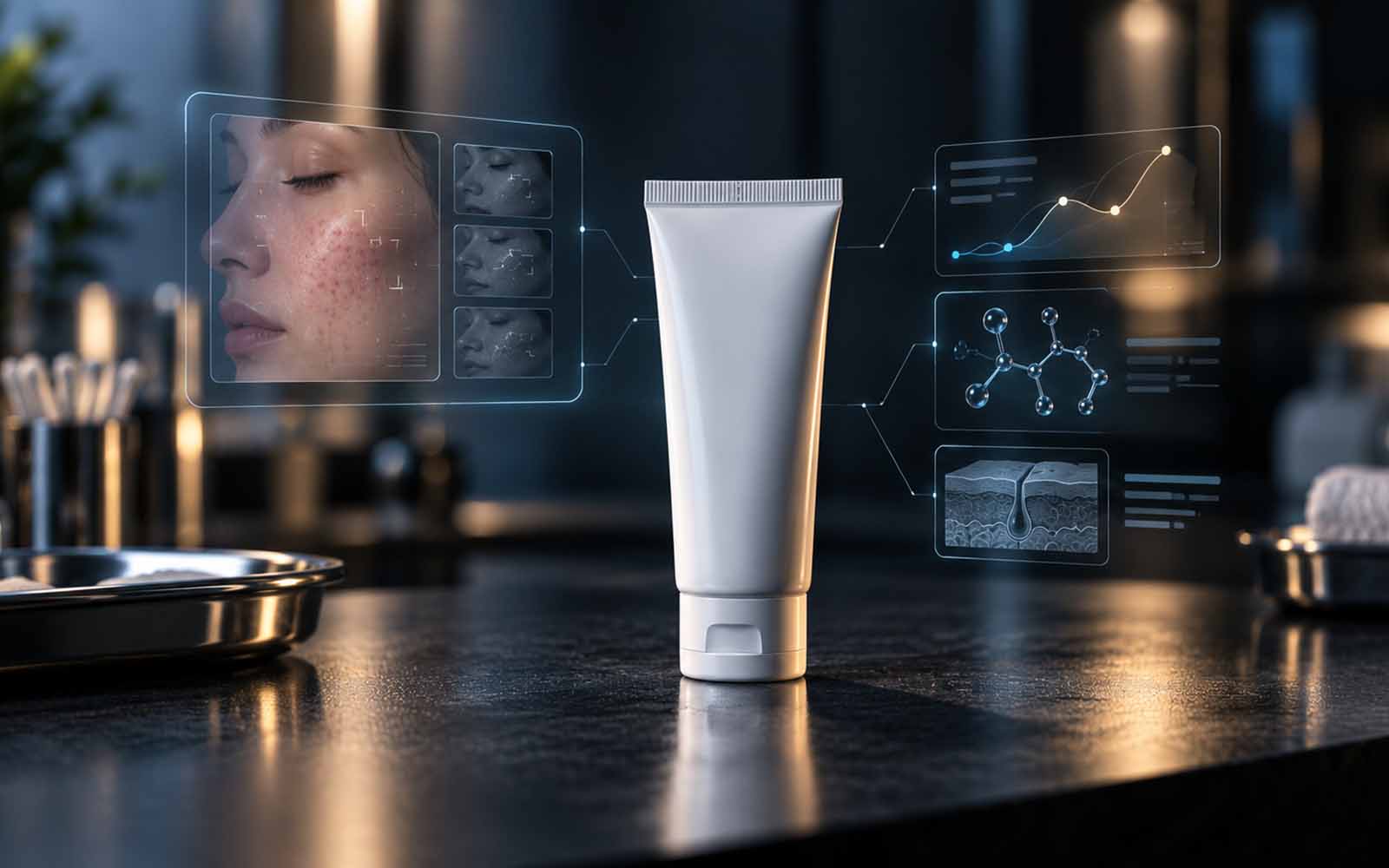
Nolla Health's approach is deliberately limited. Patients must be adults, complete a medical questionnaire, and submit facial images for analysis. The system evaluates their acne and selects from a predefined group of topical medications. Patients with more complicated conditions or certain medical risk factors are excluded from the automated process.
More importantly, Utah isn't immediately handing the system unrestricted prescribing authority.
The pilot begins with physicians reviewing prescriptions before they're issued. As the system demonstrates sufficient agreement with clinical judgment and meets safety requirements, regulators may authorize progressively less direct oversight. Eventually, qualifying prescriptions could be issued without a physician reviewing each decision beforehand.
That's an important distinction. This isn't an experiment in whether AI can replace doctors. It's an experiment in whether a carefully constrained system can safely handle a specific medical responsibility.
And there's something encouraging about that approach.
Rather than waiting for AI to become capable of handling every possible medical scenario, we're identifying narrower tasks where its performance can be measured, its limitations understood, and its authority restricted.
Of course, agreement with physicians doesn't automatically guarantee better patient outcomes. That's something ongoing evaluation needs to establish.
But if we're going to explore autonomous AI in healthcare, starting small, measuring performance, and expanding authority only when the evidence supports it seems like a reasonable place to begin.
Why This Could Be a Good Thing
It's easy to focus on what could go wrong when artificial intelligence begins making medical decisions. But we shouldn't overlook what might go right.
For many Americans, accessing healthcare is unnecessarily complicated. Appointments can take weeks to schedule, consultations can be expensive, and even relatively straightforward conditions require navigating a system that demands time, money, and patience.
Consider someone dealing with a mild case of acne. They may already know what treatment they need, but obtaining it still requires access to a licensed medical professional. If a carefully evaluated AI system can safely provide that treatment in minutes rather than weeks, that's a meaningful improvement.
There's also the question of how we use medical expertise.
Physicians spend years developing skills that extend far beyond prescribing routine medications. If technology can reliably handle certain straightforward cases, those professionals could devote more attention to patients with complicated conditions requiring deeper clinical judgment.
And we shouldn't assume that human involvement automatically guarantees better outcomes. Physicians are capable of mistakes, inconsistencies, and overlooking important information. AI systems have their own weaknesses, but they also offer the possibility of applying established clinical guidelines consistently.
None of this means Nolla's experiment has already demonstrated better patient outcomes, lower costs, or improved access on a large scale. Those benefits remain possibilities that need to be measured.
But dismissing the technology simply because it removes a traditional step in healthcare would be a mistake.
The goal should never be to preserve a process merely because it's familiar. It should be to improve the care patients actually receive.
Trust Is More Than Getting the Answer Right
Of course, allowing AI to make medical decisions introduces questions that shouldn't be ignored simply because the technology is promising.
Nolla Health reports that physicians agree with its treatment recommendations more than 96% of the time. That's encouraging, but agreement isn't the same as demonstrating that patients receive better care. We also need to understand what happens when the system gets something wrong.
Not all mistakes carry the same consequences. Recommending a slightly different medication strength is considerably different from overlooking a medical condition that makes a treatment inappropriate. A meaningful evaluation needs to examine not just how often errors occur, but how serious they are and who might be affected.
There's also a distinction between accuracy and accountability.
When a physician makes a mistake, patients have established ways to seek explanations, request another opinion, and pursue corrective action. As AI takes on greater responsibility, those protections shouldn't become harder to access.
Patients should understand when AI is making a decision, what limitations apply, and how to reach a qualified professional when something doesn't seem right. Healthcare providers, technology companies, and regulators need clearly defined responsibilities when automated decisions cause harm.
None of these concerns are reasons to abandon the experiment. They're reasons to evaluate it carefully.
Trust isn't something a system earns once and keeps forever. It requires ongoing evidence, transparency, and a willingness to change course when problems emerge.
If AI is going to assume greater responsibility in healthcare, its accountability needs to grow alongside its authority.
The Goal Isn't to Keep Humans in Every Decision
One of the more interesting questions raised by Utah's experiment is whether human involvement should always be the measure of responsible healthcare.
I don't think it should.
We've become accustomed to treating human oversight as the ultimate safeguard against AI mistakes. But oversight only matters when it's meaningful. A physician approving hundreds of automated recommendations without carefully examining them may provide less protection than a thoroughly tested system operating within clear boundaries.
That doesn't mean removing humans from healthcare. It means reconsidering where their judgment provides the greatest value.
Some medical decisions will always require careful interpretation, empathy, and an understanding of circumstances that don't fit neatly into a questionnaire. Others may eventually be handled reliably by automated systems, allowing medical professionals to concentrate on patients who need their expertise most.
The responsibility doesn't disappear when the physician steps away from an individual decision. It shifts toward the people and institutions designing, evaluating, deploying, and regulating the technology.
That's why Utah's experiment matters beyond acne medication. It gives us an opportunity to explore how clinical authority can be delegated without abandoning accountability.
We shouldn't demand that AI remain an assistant forever simply because that's the role we're comfortable giving it today. Nor should we assume that demonstrating technical capability automatically justifies granting additional authority.
Both positions overlook what responsible progress actually requires.
If AI can make healthcare more accessible, affordable, and reliable, that's a future worth pursuing. But we need evidence that those improvements are real, safeguards that evolve with the technology, and institutions willing to remain accountable for the decisions their systems make.
The real measure of progress won't be whether AI can write a prescription. It will be whether patients are better off because it can.
The Conversation
Comments
Loading comments...
Join the Conversation
Leave a comment.
I read every comment. Comments are reviewed before appearing publicly.